Synthesizing

Synthesizing – Wizening

Synthesizing

The Art of Combining Knowledge into Wisdom

“Transforming disparate knowledge into novel insights and practical wisdom”

The Foundation of Wizening

๐Ÿงฉ The Synthesis Process

Synthesizing represents the crucial first step in the wizening process where diverse knowledge sources are integrated, combined, and transformed to create new understanding, insights, and ultimately, wisdom.

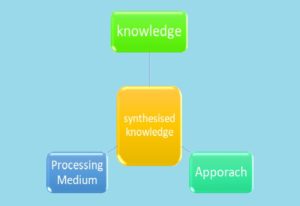
The process requires three key inputs: diverse knowledge sources, appropriate synthesis methods, and suitable processing mediums. The output is a deeper understanding that enables innovation, invention, and wise decision-making.

1
๐Ÿ“š

Inputs

Knowledge Sources

2
๐Ÿ”„

Process

Synthesis Methods

3
๐Ÿ’ป

Medium

Processing Environment

4
๐Ÿ’ก

Output

New Insights

Selecting Knowledge Sources

1 Identify the Question

Define the Focus: Clearly determine the specific question or problem that the knowledge synthesis aims to address. This provides direction and boundaries for the entire process.

Key Activities: Problem framing, question formulation, scope definition, objective setting

Outcome: Clear research direction and focused synthesis objectives

2 Preliminary Search

Explore Potential Sources: Conduct initial searches to identify potential knowledge sources across academic journals, books, reports, and relevant literature.

Key Activities: Database searching, literature scanning, source identification, preliminary assessment

Outcome: Comprehensive list of potential knowledge sources

3 Evaluate Relevance

Assess Source Alignment: Review abstracts, summaries, and content to determine how well each source addresses the core question or problem.

Key Activities: Abstract review, content assessment, relevance scoring, alignment checking

Outcome: Relevance-ranked source list

4 Assess Credibility

Verify Source Quality: Evaluate author reputation, peer-review status, publisher reliability, and methodological rigor of each source.

Key Activities: Author verification, peer-review checking, publisher assessment, methodology evaluation

Outcome: Quality-assured source selection

5 Consider Scope

Examine Coverage: Assess the temporal, geographic, and topical scope of each source to ensure comprehensive coverage.

Key Activities: Time period analysis, geographic coverage assessment, topic scope evaluation

Outcome: Well-scoped source collection

6 Determine Appropriateness

Match Methods to Needs: Consider research methodology, analysis level, and source format suitability for the synthesis goals.

Key Activities: Methodological fit assessment, format compatibility, analysis level matching

Outcome: Methodologically appropriate sources

7 Final Selection

Choose Optimal Sources: Select the most appropriate knowledge sources that collectively provide sufficient support for the knowledge synthesis.

Key Activities: Final selection, sufficiency assessment, gap identification, collection compilation

Outcome: Comprehensive source collection ready for synthesis
Mediums for Knowledge Synthesis

๐Ÿง  Human Mind

Natural Synthesis Engine: The human brain remains the most sophisticated and creative medium for knowledge synthesis, capable of intuitive connections, pattern recognition, and creative leaps that machines cannot replicate.

Strengths:

  • Intuitive pattern recognition
  • Creative insight generation
  • Contextual understanding
  • Emotional intelligence integration

Applications: Individual research, creative problem-solving, strategic planning, interdisciplinary innovation

๐Ÿ’ป Computer Systems

Computational Power: Digital systems enable large-scale data processing, pattern analysis, and systematic knowledge integration across vast information landscapes.

Strengths:

  • Large-scale data processing
  • Systematic pattern analysis
  • Rapid computation
  • Consistent methodology application

Applications: Big data analysis, systematic reviews, meta-analyses, computational modeling

๐Ÿค Collaborative Environments

Collective Intelligence: Research teams, interdisciplinary groups, and organizational settings provide diverse perspectives and shared cognitive resources for enhanced synthesis.

Strengths:

  • Diverse perspective integration
  • Distributed cognitive load
  • Cross-disciplinary fertilization
  • Collective wisdom generation

Applications: Research institutions, innovation labs, corporate R&D, academic collaborations

Optimal Medium Selection
๐ŸŽฏ

Problem-Driven Choice

Select synthesis medium based on the specific nature of the research question and available resources.

๐Ÿ› ๏ธ

Tool Accessibility

Ensure access to relevant information sources, analysis tools, and collaborative platforms.

๐ŸŒฑ

Creative Environment

Choose settings that foster intellectual creativity, focus, and innovative thinking.

โšก

Efficiency Focus

Optimize for both effective knowledge integration and efficient process execution.

Synthesis Methods & Approaches

๐Ÿ“Š

Systematic Review

Comprehensive Analysis

Structured approach to identify, evaluate, and synthesize all relevant studies on a specific research question.

Best For: Evidence-based practice, policy development, clinical guidelines

๐Ÿ“ˆ

Meta-Analysis

Statistical Integration

Quantitative synthesis of results from multiple studies to derive overall conclusions and effect sizes.

Best For: Quantitative research synthesis, treatment effectiveness, intervention studies

๐ŸŽจ

Thematic Analysis

Pattern Identification

Identifying, analyzing, and reporting patterns (themes) within qualitative data across multiple sources.

Best For: Qualitative research, interview data, narrative analysis

๐Ÿ“–

Narrative Synthesis

Story-Based Integration

Text-based approach to synthesize findings from multiple studies through summary and interpretation.

Best For: Complex interventions, diverse study types, contextual understanding

๐Ÿ”

Critical Interpretive Synthesis

Conceptual Development

Iterative approach that generates new theoretical understanding through critical interpretation of literature.

Best For: Theory development, conceptual innovation, critical analysis

Method Selection Framework

๐Ÿ” Question-Driven Selection

The nature of the research question should drive method selection. Different questions require different synthesis approaches:

Effectiveness Questions: Systematic reviews and meta-analyses

Experience Questions: Thematic analysis and narrative synthesis

Theory Development: Critical interpretive synthesis

Mixed Questions: Multi-method approaches

๐Ÿ“‹ Evidence-Based Approach

Evaluate available evidence types and quality to determine the most appropriate synthesis method:

Quantitative Evidence: Meta-analysis, statistical synthesis

Qualitative Evidence: Thematic analysis, narrative synthesis

Mixed Evidence: Integrative approaches, multi-method synthesis

Varied Quality: Critical appraisal, quality-weighted synthesis

Synthesis in Action: Historical Examples

๐ŸŒฟ Velcro Invention: Nature Meets Engineering

Knowledge Sources Synthesized:

  • Biological Observation: George de Mestral’s observation of burrs sticking to clothing and animal fur
  • Microscopic Analysis: Examination of burr hook mechanisms under microscope
  • Textile Engineering: Expertise in fabric weaving and material science

Synthesis Process:

De Mestral combined his natural observation skills with scientific investigation and engineering expertise. He recognized the potential of the burr’s hook-and-loop mechanism and systematically experimented with different materials to replicate this natural fastening system.

Innovation Outcome:

The creation of Velcro – a revolutionary fastening system that combined the efficiency of natural mechanisms with human manufacturing capabilities. This synthesis of biological observation and engineering innovation created a product used worldwide across countless applications.

๐Ÿฆท Modern Toothbrush: Evolutionary Synthesis

Knowledge Sources Synthesized:

  • Ancient Hygiene Practices: Thousands of years of oral care knowledge from Egyptian, Greek, and Roman civilizations
  • Bristle Brush Technology: William Addis’s 1780 invention of the modern bristle brush design
  • Material Science Innovation: 1930s development of nylon and synthetic materials
  • Dental Science: Professional understanding of oral health requirements

Synthesis Process:

Dr. Phillippe Guy Woog recognized the potential of combining traditional oral hygiene concepts with modern material science. He synthesized centuries of dental care knowledge with cutting-edge nylon technology to create a more effective, hygienic toothbrush design.

Innovation Outcome:

The modern nylon-bristled toothbrush that revolutionized personal hygiene worldwide. This synthesis of historical practice, traditional design, and modern materials created a product that significantly improved oral health outcomes globally.

GHA Synthesis Framework

๐ŸŒ Culturally-Aware Knowledge Integration

The GHA approach to knowledge synthesis emphasizes integrating traditional wisdom with modern scientific knowledge to create contextually relevant and culturally appropriate insights.

Our synthesis frameworks are designed to bridge indigenous knowledge systems with contemporary research methodologies, creating hybrid understanding that serves diverse community needs across the African continent.

๐ŸŒ

Cross-Cultural Synthesis

Integrating diverse cultural perspectives and knowledge systems to create richer, more comprehensive understanding.

๐Ÿบ

Traditional Wisdom Integration

Systematically incorporating indigenous knowledge and traditional practices into modern research synthesis.

๐Ÿค

Community Co-Synthesis

Engaging local communities directly in the knowledge synthesis process to ensure relevance and cultural sensitivity.

๐Ÿ”„

Adaptive Methodologies

Developing flexible synthesis approaches that can accommodate diverse knowledge types and cultural contexts.

Continue the Wizening Journey

With knowledge synthesized, the next realm explores the application and testing of integrated understanding.

Synthesizing knowledge

In synthesizing knowledge, the key inputs are typically a set of knowledge from various sources, an approach or method for synthesizing the different set of knowledge, and a processing medium where the syntheses process occurs such as a human mind, computer, or other devices.

The goal of knowledge synthesis is to produce a new or novel product that builds on existing knowledge, such as wisdom, invention, or innovation. The output of the synthesis process is a deeper understanding of the topic or problem being studied, which can then be used to generate new insights or develop new solutions.

Different Knowledge Sources

The following are some steps to select different knowledge sources that are suitable for knowledge synthesis:

1. Identify the question or problem to address: Determine the specific question or problem that the knowledge synthesis aims to answer.

2. Conduct a preliminary search: Conduct a preliminary search to identify potential knowledge sources, such as academic journals, books, reports, or other relevant literature.

3. Evaluate the relevance of sources: Assess the relevance of each potential knowledge source to the question or problem being addressed. This can involve reviewing abstracts or summaries of the sources, assessing their titles or headings, and evaluating their overall content.

4. Assess the credibility of sources: Evaluate the credibility of each potential knowledge source by considering factors such as the reputation of the author, the peer-review status of the source, and the reliability of the publisher.

5. Consider the scope of sources: Assess the scope of each potential knowledge source by considering factors such as the time period covered, the geographic region addressed, or the specific topic or sub-topic covered.

6. Determine the appropriateness of sources: Determine the appropriateness of each potential knowledge source by considering factors such as the research methodology used, the level of analysis provided, and the format of the source (e.g., text, data, images).

7. Select the most appropriate sources: Select the most appropriate knowledge sources based on the criteria identified above, and ensure that they are sufficient to support the knowledge synthesis.

Medium for Synthesizing Knowledge:

The medium used to carry out synthesizing knowledge can vary depending on the synthesizer’s resources, skills, and preferences. Some commonly used mediums include human minds, computers, and other electronic devices.

The process of knowledge synthesizing can occur in various settings, such as in research institutions, universities, government agencies, and private organizations. It can also be carried out by individuals, research teams, or interdisciplinary groups. The location of the knowledge synthesizing process can vary as well, such as in a laboratory, office, or other professional setting.

In general, the medium and location for synthesizing knowledge should be chosen based on the synthesizer’s needs and the nature of the research question or problem being addressed. The most important factor is that the medium and location support the efficient and effective synthesis of knowledge by providing access to relevant sources of information, tools for analyzing and integrating data, and an environment conducive to intellectual creativity and collaboration.

Approach or Method ofย  Synthesizing Knowledge:

The approach used for synthesizing knowledge can depend on various factors such as the nature of the question or problem, the availability and quality of knowledge sources, and the resources and skills of the synthesizer. Some commonly used approaches for synthesizing knowledge include systematic review, meta-analysis, thematic analysis, narrative synthesis, and critical interpretive synthesis.

To select the right approach for synthesizing knowledge, you can follow the following steps:

1. Identify the question or problem: Clearly define the question or problem that the knowledge synthesis aims to address.

2. Evaluate the type of evidence available: Consider the type of evidence available, such as qualitative, quantitative, or mixed-methods data.

3. Evaluate the quality of the evidence: Assess the quality and validity of the evidence available, such as by reviewing the methods used in the studies, the quality of the data collected, and the potential for bias.

4. Consider the resources and skills available: Determine the resources and skills available to the synthesizer, such as the availability of time, funding, and expertise.

5. Select the appropriate approach: Choose the approach that best fits the question or problem, the type and quality of evidence available, and the resources and skills available to the synthesizer.

6. Conduct the knowledge synthesis: Follow the steps outlined by the selected approach to conduct the knowledge synthesis, which typically include defining the research question, searching for and selecting relevant evidence, analyzing the evidence, and presenting the findings.

Examples of Synthesizing two or more Knowledge:

An example of two pieces of knowledge that gave rise to a new and novel idea is the invention of Velcro, which was inspired by the observation of burrs sticking to clothing.

In 1941, Swiss inventor George de Mestral went for a walk in the woods and noticed how burrs from burdock plants stuck to his dog’s fur and his own clothing. This led him to examine the burrs under a microscope and observe the tiny hooks that allowed them to attach to fabrics. This observation inspired de Mestral to create a new type of fastener that mimicked the burdock plant’s mechanism.

To develop his idea, de Mestral used the knowledge he had gained from studying the burdock plant and combined it with his expertise in textile weaving. He experimented with different materials and eventually developed a system of hooks and loops that could be used as a fastener. The resulting product was named “Velcro” (a combination of the French words “velours” and “crochet” meaning “velvet” and “hook” respectively).

The combination of de Mestral’s observations and knowledge of the burdock plant’s mechanism, and his experience in textile weaving and materials science, led to the invention of a new and novel product that has become widely used in a variety of applications, from clothing and shoes to aerospace and medical devices.

Another example of two or more pieces of knowledge that gave rise to a new and novel idea is the invention of the modern toothbrush, which was developed based on the combination of several pieces of knowledge and technology.

The first piece of knowledge was the concept of oral hygiene, which dates back thousands of years. Ancient civilizations, such as the Egyptians, Greeks, and Romans, used a variety of tools to clean their teeth, such as twigs, animal hair, and even feathers.

The second piece of knowledge was the invention of the modern bristle brush, which dates back to the late 18th century. In 1780, William Addis, an English inventor, created the first modern toothbrush by drilling small holes into a bone handle, inserting bristles from a pig’s neck hair, and tying them in place with wire.

The third piece of knowledge was the development of new materials, such as nylon, which was invented in the 1930s. This new material was strong, durable, and could be easily molded into various shapes, including toothbrush bristles.

The combination of these pieces of knowledge led to the development of the modern toothbrush as we know it today. In the 1930s, Dr. Phillippe Guy Woog, a French dentist, recognized the potential of nylon as a toothbrush bristle material and collaborated with a manufacturer to create the first nylon-bristled toothbrush. This new toothbrush was more hygienic, effective, and comfortable to use than previous versions, and quickly became popular around the world.